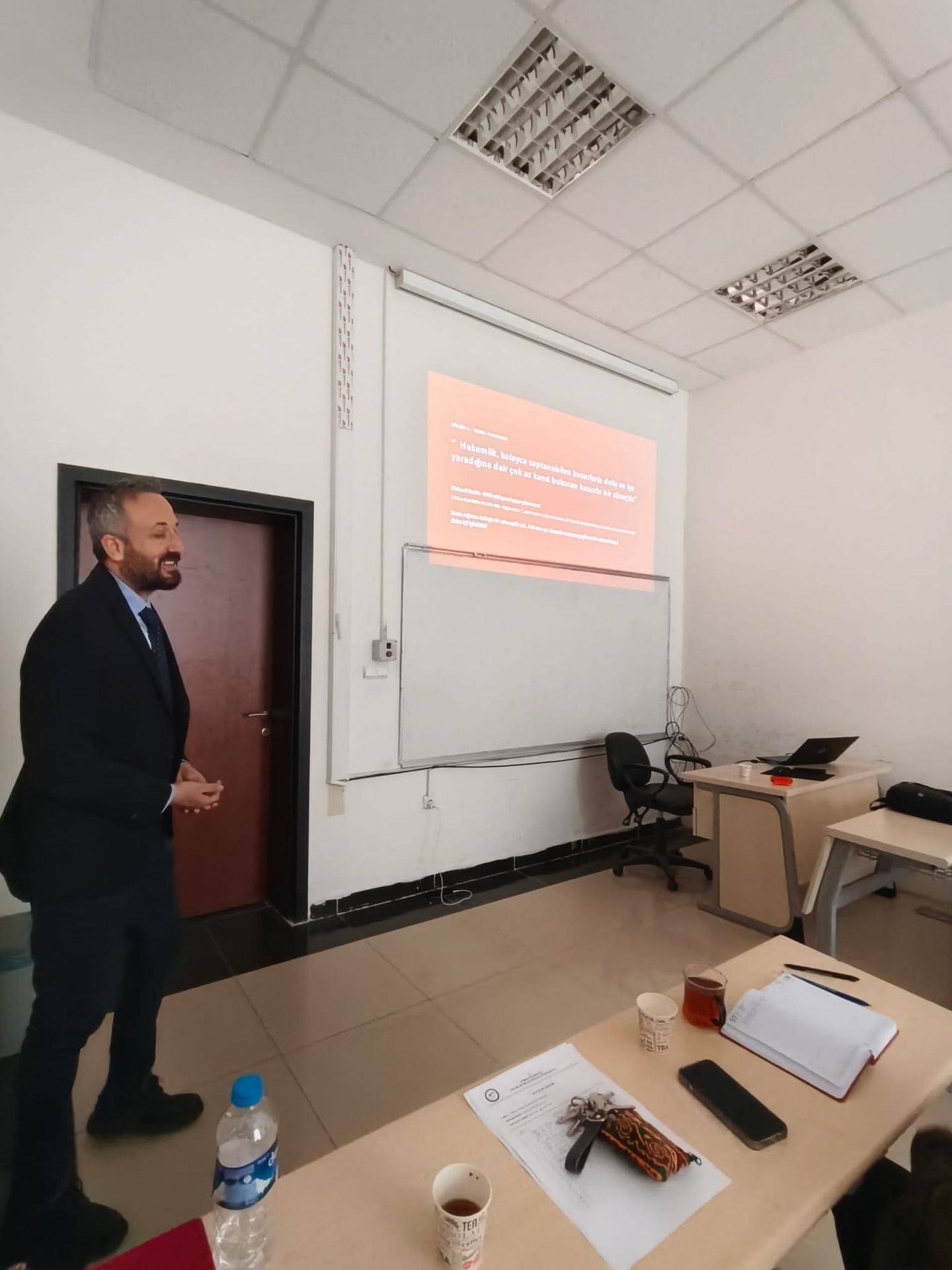
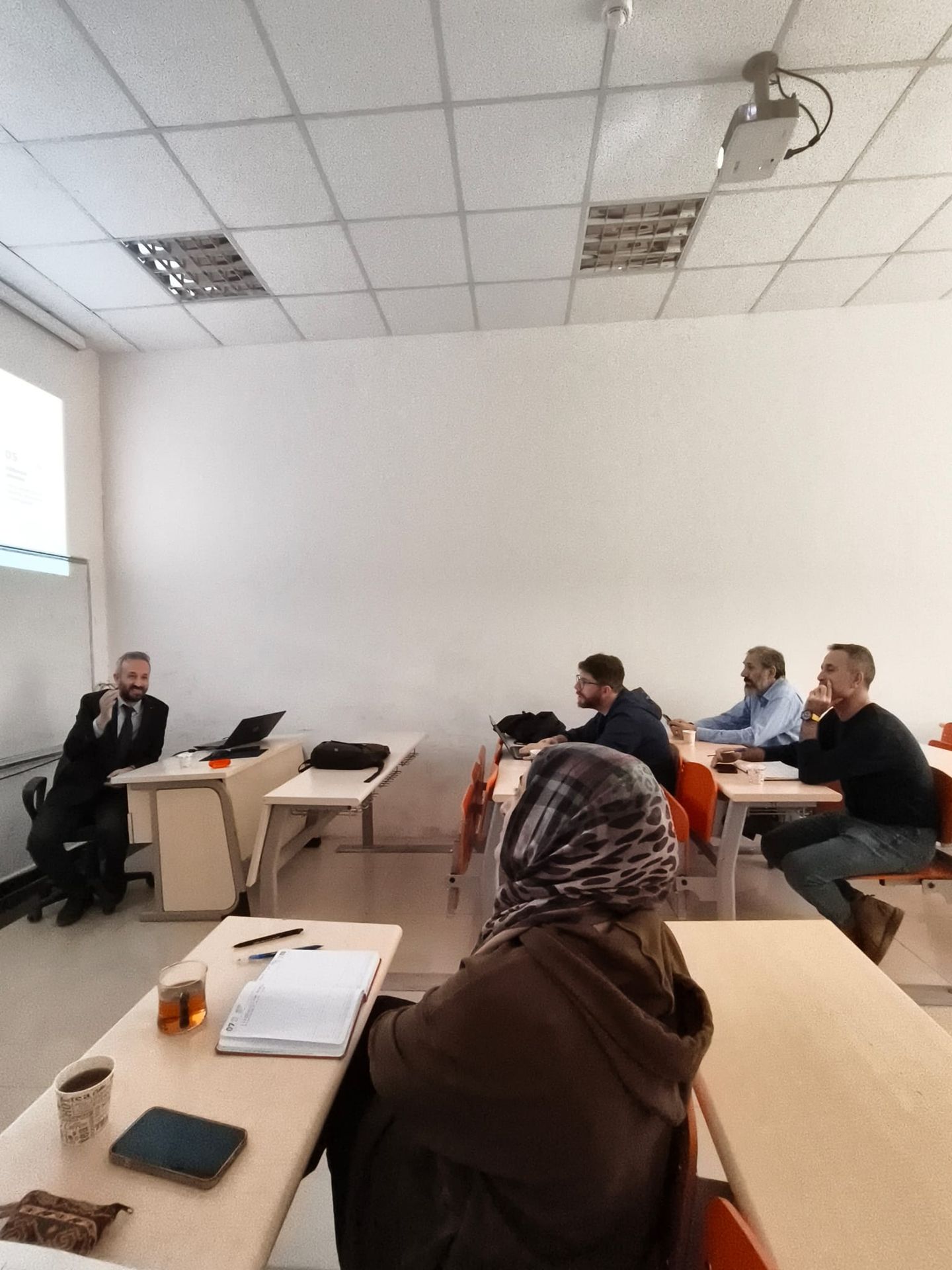
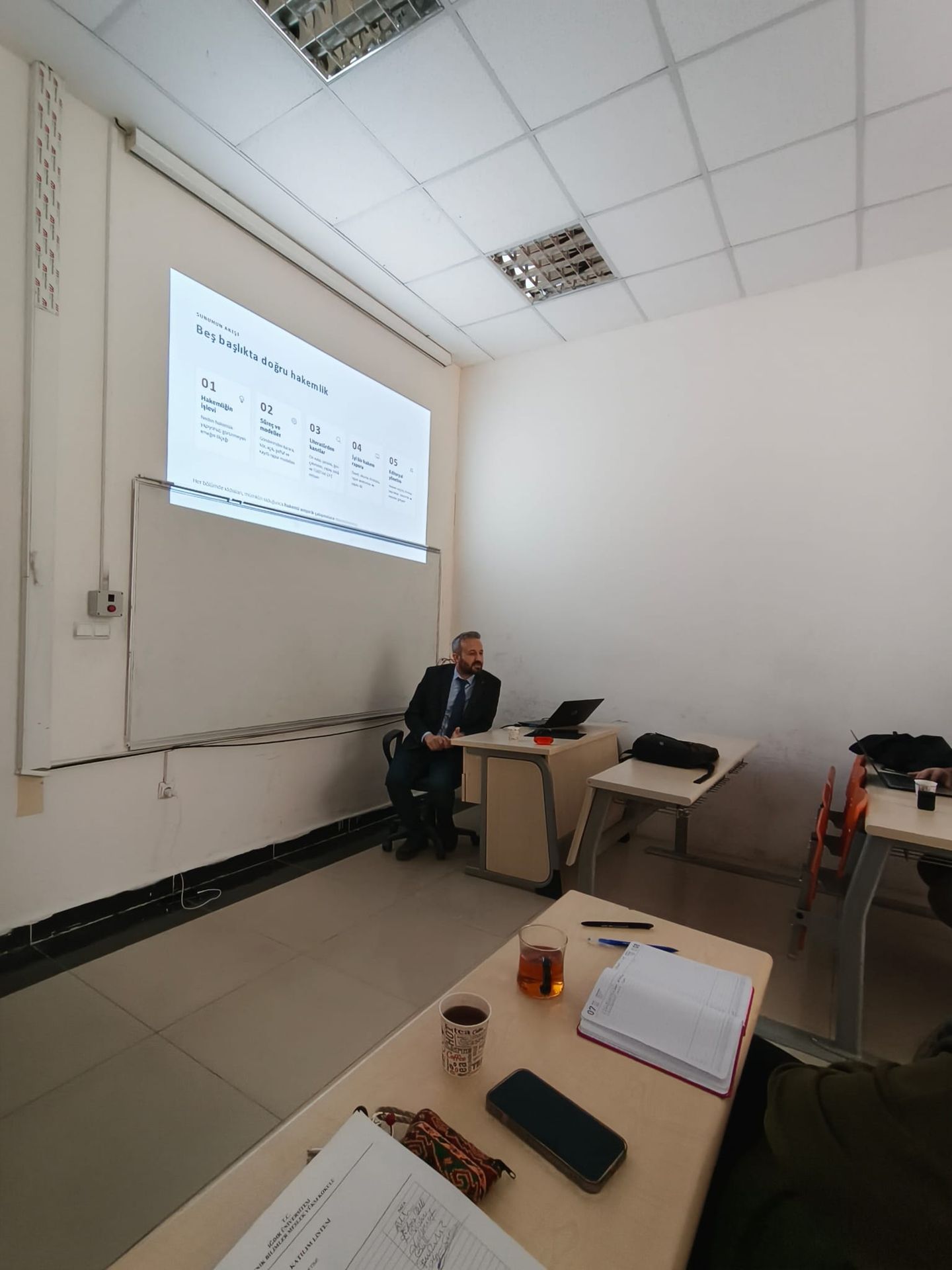
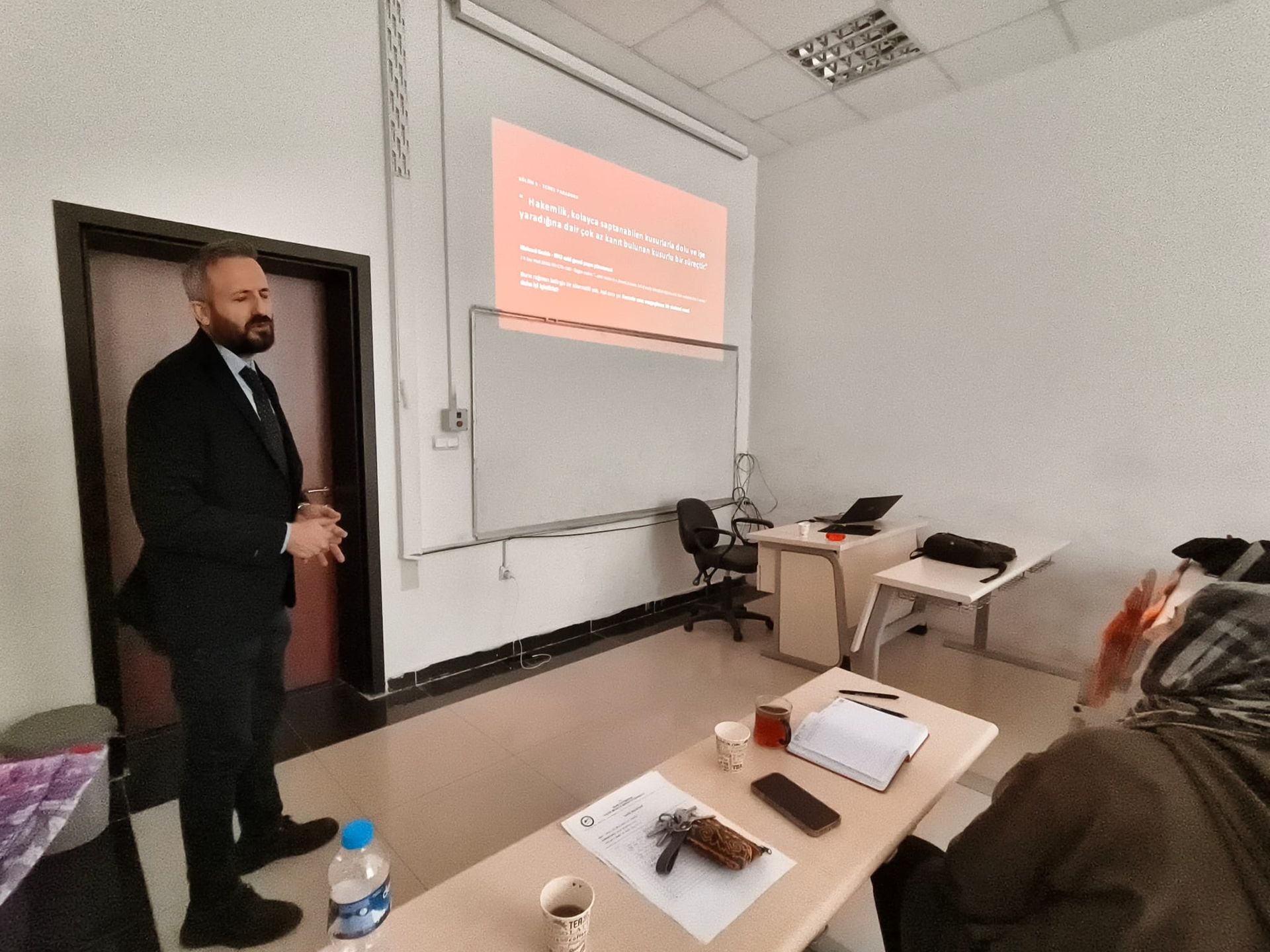
“Proper Refereeing Process and Management” Training Program Conducted
The training program titled “Proper Peer Review Process and Management,” organized by the Vocational School of Technical Sciences at Iğdır University, was held in person on Friday, November 6, 2026, in Classroom 1 of the Vocational School building. The program, led by Assoc. Prof. Dr. Muhittin Kulak—Head of the Department of Bioengineering and Sciences—was attended by academic staff.
Assoc. Prof. Dr. Kulak emphasized that peer review is a fundamental mechanism for ensuring the reliability of scientific knowledge. Approaching the subject within an evidence-based framework, he noted that empirical evidence regarding the effectiveness of this mechanism remains limited. The session began by discussing the functions of peer review and its global scale; it then examined the lifecycle of an academic article—from submission to final decision—and compared various review models, including single-blind, double-blind, open, transparent, and registered report formats.
A significant portion of the program was dedicated to examining concrete cases from international literature:
- The extent to which reviewers are able to detect errors in articles
- Biases related to the author’s identity and institution
- The tone and professionalism of reviewer reports
- Publications retracted years later due to reasons such as fake reviewer accounts, undisclosed conflicts of interest, and editors handling manuscripts for which they were co-authors
Participants were also introduced to tools that can be used to track retracted publications and conflicts of interest.
The use of artificial intelligence tools in the review processes within education was also discussed in detail. In this context, the "Guide on the Responsible and Reliable Use of Generative Artificial Intelligence in Support Processes," published by TÜBİTAK in January 2026, was shared. According to the guide, the use of generative AI tools in evaluation processes is strictly prohibited. Assoc. Prof. Dr. Kulak stated that this prohibition is based on concerns regarding confidentiality, the protection of personal data, intellectual property, and accountability.
The practical segment covered the following topics: questions to consider before accepting an invitation to review, strategies for reading a manuscript, the structure of a reviewer report, examples of destructive versus constructive feedback, and a methodological checklist for experimental studies. The program concluded with a Q&A session and an evaluation.